












A digital generation, different travel habits and rising expectations of technology are changing how guests find, book and experience accommodation. What does this mean for travel agencies, property managers and private hosts?
Imagine a guest planning their next holiday. They find inspiration on TikTok, check the destination on Instagram, compare reviews across several platforms and use artificial intelligence to find the best options for their budget.
Before even opening your accommodation page, they already have a fairly clear idea of what they want.
And when they finally find your property, they expect straightforward information, transparent pricing, quick communication and a booking they can complete without unnecessary steps.
Meet Generation Z — the generation changing the rules of tourism.
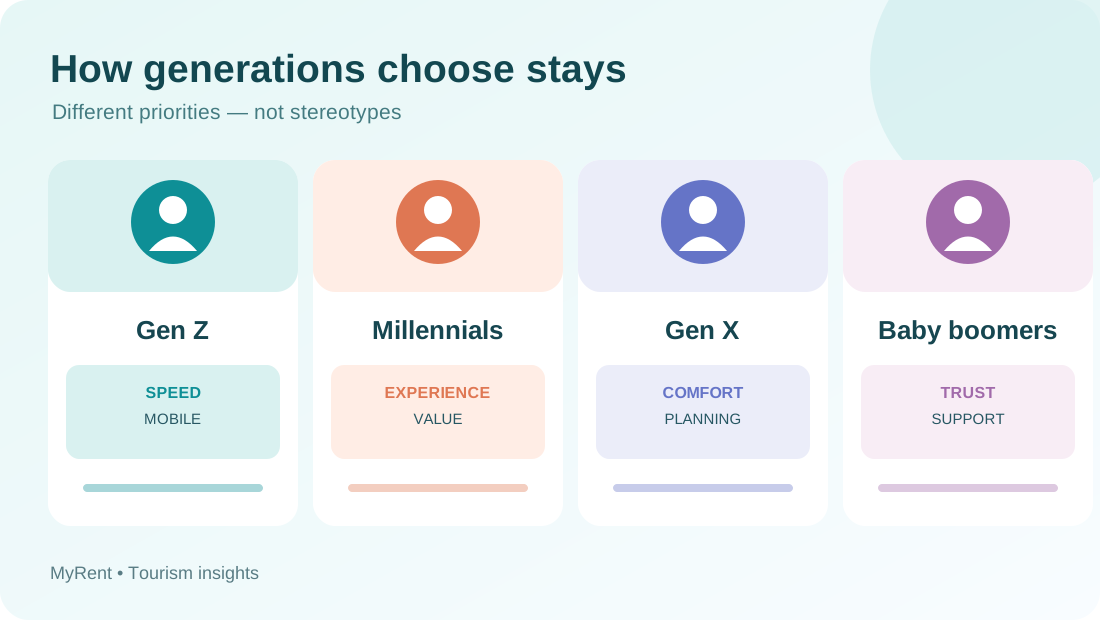
How four generations compare when choosing accommodation
Who is Generation Z and why does it matter for tourism?
Generation Z is generally defined as people born between 1997 and 2012. They grew up with smartphones, social media and almost unlimited access to information.
Unlike previous generations, digital technology is not a novelty for them but an integral part of everyday life.
Their importance to tourism goes beyond using technology. Older members of Gen Z are already employed, travel independently, have their own budgets and make their own travel decisions.
Their expectations are gradually becoming an important benchmark for the tourism offering of the future.
Still, we should avoid generalizations. Not everyone in a generation travels alike. Age, finances, individual preferences and the purpose of a trip are often as important as generational identity.
1. Travel starts long before the booking
Holiday planning once often began with a visit to a travel agency or a search on familiar booking platforms.
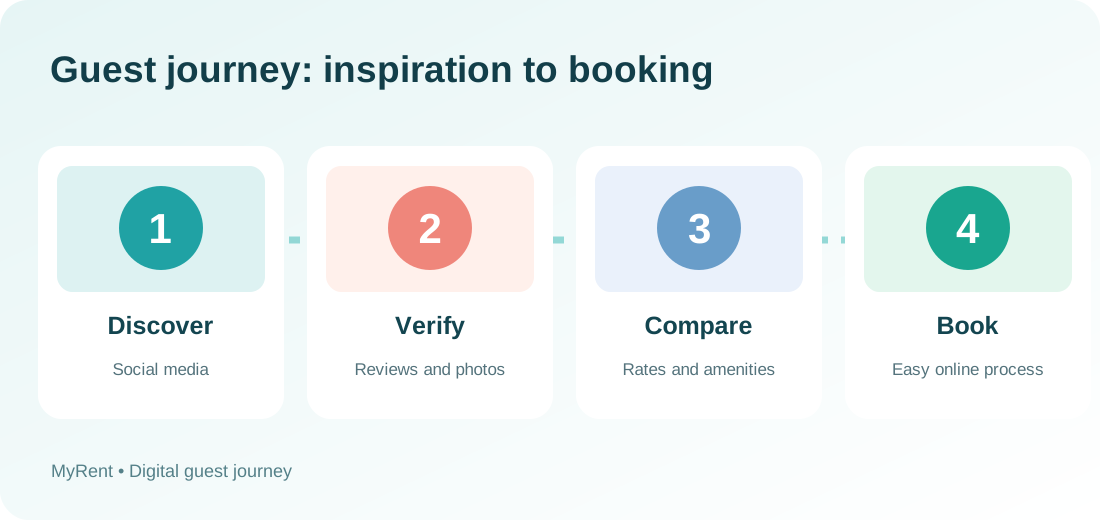
The Gen Z guest journey: from inspiration and reviews to comparison and booking
Today inspiration may come from a short video, a creator's recommendation, a photo of an unfamiliar destination or a conversation with an AI assistant.
For Generation Z, choosing accommodation is not necessarily a linear process.
A guest may discover a destination on social media, check its location on Google Maps, read Booking.com reviews and ultimately book directly on the property's website.
What does this mean for accommodation providers?
Being listed on booking platforms alone is no longer enough for a strong digital strategy.
It is important to consider the entire guest journey, from the first encounter with your property to the final reservation.
High-quality photos, up-to-date details, authentic reviews and a simple website are all important parts of that same journey.
2. Transparency matters more than a perfect presentation
Generation Z grew up surrounded by digital advertising, so its members can often distinguish authentic content from an overly polished presentation.
Professional photos are still important, but guests want to know what the accommodation really looks like.
How far is it from the beach? Is the Wi-Fi reliable? What is the neighborhood like? Are there extra charges? Does the property match the photos?
If these answers are hard to find, a potential guest may keep searching.
Practical advice: review your listings through the eyes of someone seeing your accommodation for the first time.
Check that prices are clear, photos are current, amenities are described accurately and house rules are easy to understand.
Sometimes eliminating uncertainty matters more than spending more on advertising.
3. Response speed becomes part of the guest experience
Digital generations are accustomed to accessing information quickly.
If guests must exchange several messages to learn the final price, arrival rules or availability of an amenity, their interest can fade quickly.
This is particularly challenging for travel agencies and property managers handling dozens or hundreds of accommodation units at the same time.
How can you communicate quickly and well with every guest without placing extra pressure on staff?
Increasingly, the answer lies in automation.
Centralized reservation systems, automated messages and digital communication tools can help deliver timely information.
Automation does not mean communication must lose its personal touch.
On the contrary, when technology takes over routine tasks, staff can spend more time on situations that truly require human support.
4. Artificial intelligence is changing how accommodation is discovered
More and more travelers are exploring the possibilities of artificial intelligence when planning a trip.
Instead of searching dozens of websites, a guest can ask an AI assistant:
Find me an apartment in Split for four people, near the beach, with parking, for up to €150 per night.
Artificial intelligence can help research destinations, compare options and prepare an itinerary.
This raises a new question for tourism: will your offer be clear, accessible and relevant enough in a world where AI increasingly participates in travel research?
Well-structured accommodation data, current information and a well-managed digital presence are becoming essential foundations.
There is no reason to assume AI will always find or recommend every property. However, clarity and accessibility also benefit traditional search engines, booking platforms and new digital tools.
5. Fewer formalities, more flexibility
For many younger travelers, simplicity is an important part of a quality stay.
Digital check-in, clear arrival instructions, online communication and easy access to information can significantly improve the guest experience.
That does not mean everyone wants to avoid all contact with the host.
Having a choice matters.
Guests arriving late at night may appreciate self-check-in. Others may prefer to speak with their host and ask for a local restaurant recommendation.
The best experience is not necessarily the one with the most technology, but the one that lets guests easily get what they need.
6. Experiences often matter more than extra luxury
Younger generations often seek authentic experiences and local activities.
That might mean a small family-run restaurant, a lesser-known beach, a local festival or an interesting activity not found in every travel guide.
For private hosts and travel agencies, this is an opportunity to create additional value.
A host who recommends local experiences often offers something that a large booking platform cannot convey as personally.
Digital guides, personalized suggestions and useful pre-arrival information can connect technology with an authentic destination experience.
7. Technology should simplify work, not replace hospitality
The expectations of new guest generations pose a challenge for tourism professionals.
Fast communication, accurate information, flexibility and quality service all require good organization.
When an agency manages many properties, manually updating calendars, answering repetitive questions and handling administration consume time that could be used more productively.
That is why technology is becoming valuable support in everyday operations.
Systems such as MyRent, combining PMS and Channel Manager functionality, enable centralized management of reservations, availability, prices and operational processes.
This creates the conditions for more efficient work and a more consistent guest experience.
But technology is only one part of a successful tourism story.
A guest may book because of a great digital presentation, but they will remember the experience they had during their stay.
Check the essentials before the next booking:
- Accurate photos and descriptions
- Clear total price and additional fees
- Fast replies and automated common answers
- Mobile-friendly booking process
- Arrival instructions and a digital guide
- Authentic local recommendations
Conclusion: not only guests, but their journey to booking is changing
Generation Z does not bring entirely new rules of hospitality.
Guests still want a fair price, safety, comfortable accommodation, good service and a sense of welcome.
What changes is how they discover and reach those values.
Today the path from inspiration to booking is increasingly digital, dynamic and shaped by many sources of information.
For agencies, property managers and hosts, this means success depends not only on accommodation quality but also on the entire guest experience.
The future of tourism is not a choice between technology and personal service. It lies in combining them intelligently.
Those who understand this today will be better prepared for tomorrow's guests.
Topic inspiration: Barbara Pozarić, article on Generation Z and changing travel habits, Turizam Info, autumn 2026, pp. 101–105.


